
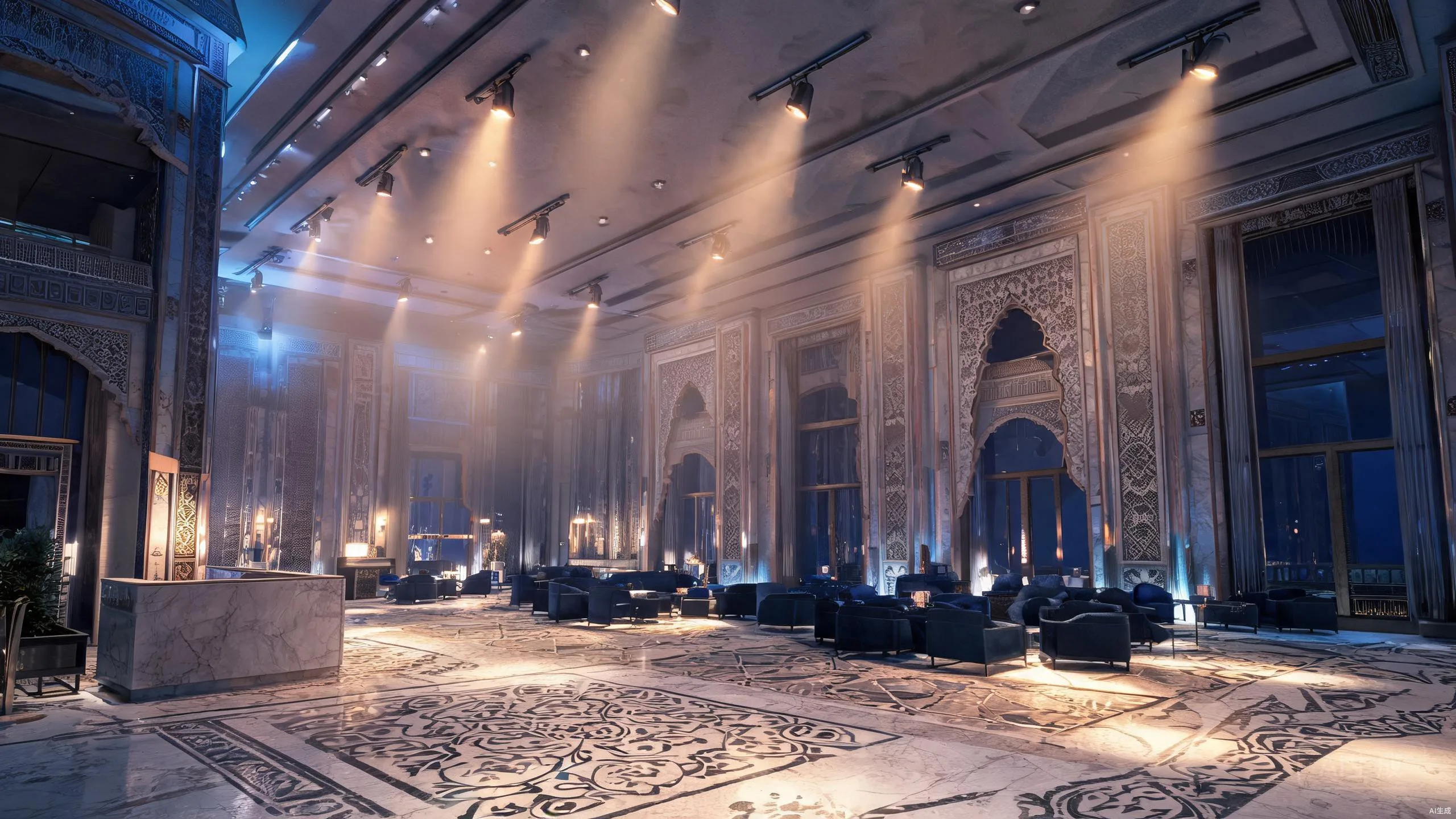
If you're still using on/off switches for your commercial building lighting in 2026, you're leaving money on the table. Smart lighting systems can cut your lighting energy use by 40-60%, reduce maintenance costs by 70%, and actually improve occupant comfort and productivity. In the Middle East, where electricity costs are rising and sustainability is becoming mandatory (thanks to Saudi Vision 2030 and UAE Net Zero 2050), smart lighting isn't a "nice to have" anymore—it's a standard feature of modern commercial buildings. This guide walks you through what smart lighting actually does, what technologies to consider, and how to make it work for your project.
Why Smart Lighting Is Non-Negotiable for Modern Buildings
Let's start with the numbers because that's what gets decision-makers' attention.
A typical 10,000 sqm commercial building in Riyadh or Dubai spends about 200,000-300,000 AED/SAR per year on lighting electricity. Add maintenance (bulb replacements, labor) and you're looking at another 30,000-50,000 per year.
With a smart lighting system, you can expect:
- 40-60% reduction in lighting energy use (from occupancy sensing, dimming, scheduling)
- 70% reduction in maintenance costs (longer LED life + predictive maintenance alerts)
- 10-15% improvement in occupant productivity (better light quality, personal control)
- 5-10% reduction in HVAC energy (LEDs produce less heat + coordinated setbacks)
Total savings? 100,000-200,000 per year for that 10,000 sqm building. And the system typically costs 150,000-300,000 to install. Payback period? 1.5-3 years. After that, it's pure profit.
But it's not just about money. Smart lighting also:
- Improves building value (smart buildings command 10-15% higher rents)
- Helps meet green building certifications (LEED, Estidama, Sa'fat)
- Provides data and insights about space utilization
- Enhances safety and security
- Creates a better experience for occupants
In a market like the Middle East, where every major developer is trying to build "smart buildings" and "smart cities," lighting is the easiest, fastest, highest-ROI smart building upgrade you can make.
What Smart Lighting Actually Does
Let's break down the features so you know what you're actually paying for.
1. Occupancy and Vacancy Sensing
The #1 energy-saving feature. Lights turn on when someone enters a room, turn off (or dim) when they leave.
How it works:
- Passive Infrared (PIR) sensors detect body heat
- Ultrasonic sensors detect motion
- Dual-tech sensors use both for better accuracy
- Sensors can be ceiling-mounted, wall-mounted, or integrated into fixtures
Savings: 30-50% in low-occupancy areas (private offices, meeting rooms, restrooms, storage rooms)
Best for: Spaces that are frequently empty—meeting rooms, private offices, corridors, restrooms, storage areas
2. Daylight Harvesting
Why use electric light when the sun is shining? Daylight harvesting sensors dim electric lights when natural light is sufficient.
How it works:
- Photosensors measure ambient light levels
- Controller dims or brightens electric lights to maintain a target level
- Works best near windows, skylights, and atriums
Savings: 10-30% in areas with significant daylight
Best for: Offices with windows, atriums, retail spaces with skylights, buildings with large glass facades
3. Scheduling and Time-Based Control
Lights turn on and off based on a schedule. Simple but effective.
Features:
- Daily/weekly schedules
- Holiday schedules
- Sunrise/sunset tracking (for outdoor lighting)
- Astronomical time clocks (adjusts for seasonal changes)
Savings: 10-20% by ensuring lights aren't on when they shouldn't be
Best for: Buildings with predictable operating hours—offices, schools, retail, warehouses
4. Dimming and Tunable White
Not every space needs full brightness all the time. Dimming lets you adjust light levels for different tasks and moods.
Dimming:
- Adjust brightness from 0-100%
- Different scenes for different activities (Presentation, Discussion, Video Call)
- Smooth fades, no flickering
Tunable white:
- Adjust color temperature from warm (2700K) to cool (6500K)
- Match natural daylight patterns (circadian lighting)
- Cooler light in the morning for alertness, warmer in the afternoon for relaxation
Benefits:
- Better occupant comfort and productivity
- More flexibility in how spaces are used
- Energy savings (dimming by 20% saves ~20% energy)
5. Personal Control
Let people adjust their own lighting. It's a bigger deal than you think.
Options:
- Wall switches with dimmers
- Desk-side controls
- Smartphone apps
- Voice control (Alexa, Google Home—mostly for residential, creeping into commercial)
- Desktop software
Benefits:
- Higher occupant satisfaction
- Better productivity (people set light to their preference)
- Energy savings (people dim lights when they don't need full brightness)
6. Energy Monitoring and Reporting
You can't manage what you don't measure. Smart lighting systems track energy use and give you detailed reports.
What you can track:
- Energy use per floor, per zone, per fixture
- Run hours and on/off times
- Occupancy patterns
- Cost savings calculations
- Carbon emissions reductions
Benefits:
- Identify waste and optimization opportunities
- Sustainability reporting
- Tenant billing (for multi-tenant buildings)
- Verify savings from energy efficiency projects
7. Predictive Maintenance
Instead of waiting for lights to fail, get alerts before they do.
How it works:
- System monitors fixture performance (light output, power consumption, temperature)
- Algorithms predict when fixtures will fail based on usage and performance trends
- Alerts sent to maintenance team
- Maintenance can be scheduled proactively instead of reactively
Benefits:
- 50-70% reduction in emergency maintenance calls
- Longer fixture life (proactive replacement of failing drivers)
- Better budgeting for maintenance
- Fewer dark areas and complaints
Smart Lighting Technologies: What Are Your Options?
There's more than one way to build a smart lighting system. Here are the main technologies and when to use each.
Wired Systems (DALI, 0-10V)
The traditional approach. Wires run from each fixture back to a controller.
DALI (Digital Addressable Lighting Interface):
- Digital protocol, each fixture has an address
- Individual control and monitoring of every fixture
- Two-way communication (can get status and data back)
- Standardized, multi-vendor interoperability
- More expensive upfront, more capable
0-10V dimming:
- Analog protocol, simple and widely supported
- Group dimming only (not individual fixture control)
- One-way communication (control only, no feedback)
- Cheaper, simpler, but less capable
Best for: New construction, where you're running wires anyway. Higher budget, need for advanced features and monitoring.
Wireless Systems (Zigbee, Bluetooth Mesh, LoRaWAN)
No control wires—fixtures communicate wirelessly.
Zigbee:
- Mesh network, self-healing
- Low power, low cost
- Good for indoor commercial lighting
- Widely supported by many manufacturers
Bluetooth Mesh:
- Uses Bluetooth Low Energy (BLE)
- Mesh topology, no hub required
- Easy setup with smartphone
- Good for retrofits and smaller projects
LoRaWAN:
- Long range (kilometers), low power
- Good for outdoor and large-area applications
- Lower data rate (not for real-time control)
- Popular for street lighting and smart city applications
Wi-Fi:
- High bandwidth, easy integration with IT networks
- Higher power consumption
- Can strain Wi-Fi networks with many devices
- Less common for lighting control specifically
Best for: Retrofits (where running wires is expensive), outdoor lighting, smart city applications, flexible spaces.
Hybrid Systems
Most real-world systems are a mix. Wired DALI for the main building system, wireless for retrofit areas or flexible spaces.
Common hybrid approaches:
- Wired DALI backbone + wireless sensors
- Wired fixtures + wireless control interfaces (switches, apps)
- Wired indoor + wireless outdoor
Pro tip: For most commercial buildings, DALI is the gold standard for indoor lighting. It's more expensive upfront, but it's more reliable, more capable, and will last longer. Wireless is great for retrofits and outdoor applications.
| Feature | DALI | 0-10V | Wireless |
|---|---|---|---|
| Individual fixture control | Yes | No (groups only) | Yes |
| Two-way communication | Yes | No | Yes |
| Installation cost | Higher | Low | Medium |
| Best for | New construction | Basic dimming | Retrofits, outdoor |
System Architecture: How It All Fits Together
A smart lighting system has several layers. Let's break it down from top to bottom.
1. Cloud Platform / Software
The user interface and data layer. This is what you actually interact with.
What it does:
- Dashboard with real-time status and energy use
- Scheduling and scene configuration
- Reporting and analytics
- Alerting and notifications
- User management and access control
Deployment options:
- Cloud-based (SaaS): Easy setup, automatic updates, accessible from anywhere. Subscription fee.
- On-premise: Installed on your own servers. More control, more IT work required. One-time license fee.
Popular platforms:
- Philips Dynalite
- Lutron Quantum
- Leviton DALI
- Acuity Brands nLight
- Various open-source and custom solutions
2. Controllers / Gateways
The "brains" of the system. These process inputs and send commands to fixtures.
Types:
- Area controllers: Manage a floor or zone
- Room controllers: Manage a single room
- Gateway: Connects the lighting system to the network/cloud
- Edge controllers: Process data locally for faster response
3. Sensors and Input Devices
The "eyes and ears" of the system. These detect what's happening and send signals to the controller.
Types:
- Occupancy sensors (PIR, ultrasonic, dual-tech)
- Photosensors (daylight harvesting)
- Wall switches and dimmers
- Touch panels
- Door contacts
- Integration inputs (from BMS, security, AV systems)
4. Fixtures and Drivers
The "muscles" of the system. These actually produce the light.
Smart fixture features:
- Dimmable driver (DALI, 0-10V, wireless)
- Built-in sensors (some fixtures have occupancy/light sensors built in)
- Power metering (measure energy use at the fixture)
- Temperature monitoring
- Color tuning (tunable white)
Integration with Other Building Systems
Smart lighting doesn't exist in a vacuum. The real magic happens when you integrate it with other building systems.
HVAC Integration
This is the big one. Lighting and HVAC are the two biggest energy users in most buildings. Coordinating them saves more energy than either can alone.
How it works:
- Occupancy sensor turns on lights AND adjusts HVAC when someone enters a room
- When a room is vacant, lights turn off AND HVAC goes to setback
- Daylight harvesting dims lights AND adjusts cooling (less heat from lights = less cooling needed)
Additional savings: 10-20% on HVAC energy, on top of lighting savings
BMS (Building Management System) Integration
Most commercial buildings already have a BMS that controls HVAC, security, fire safety, etc. Integrating lighting into the BMS gives you a single pane of glass for the whole building.
Benefits:
- One dashboard for all building systems
- Coordinated scheduling and scenes
- Unified alarm management
- Better data and reporting
- Simplified operations
AV (Audio-Visual) Integration
For meeting rooms, conference centers, and auditoriums.
Scenes:
- "Presentation mode": Lights dim, screen drops, projector turns on
- "Video conference mode": Lights adjust for camera visibility, camera turns on
- "Discussion mode": Lights brighten, screen goes up
Security Integration
Lighting and security work hand in hand.
Integration points:
- Motion sensors trigger lights (security lighting)
- Alarm system triggers full brightness in affected areas
- Access control turns on lights when someone enters after hours
- CCTV cameras use lighting data to adjust exposure
Emergency Lighting Integration
Smart systems can monitor and test emergency lighting automatically.
Features:
- Automatic monthly/annual testing
- Reporting for code compliance
- Real-time status of all emergency fixtures
- Alerts for failed batteries or fixtures
Smart Lighting for Different Building Types
Smart lighting isn't one-size-fits-all. Different building types have different needs.
| Building Type | Key Features | Typical Savings |
|---|---|---|
| Office Buildings | Occupancy sensing, daylight harvesting, personal control, tunable white | 40-60% |
| Retail and Malls | Daypart scheduling, scene control, energy monitoring per tenant | 25-40% |
| Warehouses | High-bay occupancy sensors, aisle-by-aisle control, shift scheduling | 50-70% |
| Hotels | Room occupancy sensing, PMS integration, guest scenes | 30-50% |
| Outdoor / Street | Astronomical clocks, dimming schedules, remote monitoring | 40-60% |
Office Buildings
The most common application.
Key features:
- Occupancy sensing in private offices and meeting rooms
- Daylight harvesting near windows
- Personal control for employees
- Scheduling (work hours, after hours, weekends)
- Tunable white for circadian rhythm support
Typical savings: 40-60% lighting energy reduction
Retail and Malls
Retail has very different patterns—long hours, varying traffic, emphasis on appearance.
Key features:
- Daypart scheduling (morning, afternoon, evening, late night)
- Daylight harvesting in atriums and near entrances
- Scene control for displays and promotions
- Energy monitoring per tenant (for billing)
- Integration with mall BMS
Typical savings: 25-40% lighting energy reduction (retail needs more light, so less savings from dimming)
Warehouses and Industrial
High ceilings, big spaces, varying occupancy.
Key features:
- High-bay occupancy sensors (motion detection at 10-20m height)
- Daylight harvesting (if there are skylights)
- Aisle-by-aisle control (only light the aisle someone is in)
- Scheduling (shift-based)
- Integration with warehouse management systems
Typical savings: 50-70% lighting energy reduction (warehouses have lots of empty space)
Hotels and Hospitality
24/7 operation, but lots of variation in occupancy.
Key features:
- Room occupancy sensing (lights off when room is empty)
- Integration with door locks (welcome scene when guest enters)
- Daypart scheduling for public areas
- Scene control in guest rooms and meeting spaces
- Integration with PMS (Property Management System)
Typical savings: 30-50% lighting energy reduction
Outdoor and Street Lighting
The largest smart lighting application by volume.
Key features:
- Astronomical time clocks (sunrise/sunset)
- Dimming schedules (dim after midnight)
- Remote monitoring and failure alerts
- Asset management (track every fixture)
- Integration with smart city systems
Typical savings: 40-60% lighting energy reduction
Common Smart Lighting Mistakes to Avoid
After working on dozens of smart lighting projects across the Middle East, we've seen the same mistakes repeated. Here's what not to do.
1. Over-Specifying (Buying Features You Don't Need)
You don't need every bell and whistle. Tunable white in a warehouse? Waste of money. Individual fixture control in a storage room? Overkill.
Fix: Start with the features that give you the most ROI—occupancy sensing, scheduling, daylight harvesting. Add advanced features only where they make sense.
2. Under-Specifying (Buying Cheap Junk That Fails)
On the other end of the spectrum, buying the cheapest wireless system you can find on Alibaba. These systems are unreliable, have terrible software, and fail in 2-3 years.
Fix: Stick with established brands and proven technologies. DALI from reputable manufacturers is a safe bet.
3. Bad Sensor Placement
Sensors placed in the wrong spot cause false triggers (lights turning on when no one's there) or missed detections (lights not turning on when someone enters).
Fix: Follow manufacturer guidelines for sensor placement. Test thoroughly after installation. Use dual-tech sensors for tricky areas.
4. Ignoring the IT Department
Smart lighting systems use the network. If you don't involve IT early, you'll have problems with network access, security, VLANs, and integration.
Fix: Involve IT from the beginning. Discuss network architecture, security, bandwidth, and management.
5. Poor User Experience
If the system is hard to use, people will bypass it. Wall switches that don't work intuitively, apps that are confusing, scenes that don't make sense—all lead to user frustration.
Fix: Design for the user, not the technician. Keep interfaces simple. Test with real users. Provide training.
6. No Commissioning
Installing the hardware is only half the job. Commissioning—setting up scenes, tuning sensors, verifying performance—is what makes the system actually work.
Fix: Budget time and money for proper commissioning. It's worth it. A poorly commissioned smart system can waste more energy than a dumb system.
Case Study: King Abdullah Financial District (KAFD) Smart Lighting
Let's look at one of the biggest smart lighting projects in the Middle East—KAFD in Riyadh.
The project: 6.5 million sqm mixed-use development with 30+ buildings, including offices, hotels, retail, and public spaces.
What they did:
- Full DALI smart lighting system across all buildings
- Occupancy sensing in all offices and meeting rooms
- Daylight harvesting in perimeter zones
- Tunable white lighting for circadian support
- Integration with BMS, HVAC, and security systems
- Centralized management platform
- Outdoor smart lighting with street light management
The results:
- 55% reduction in lighting energy use (vs. code-minimum LED)
- 70% reduction in lighting maintenance costs
- LEED Platinum certification for most buildings
- 12% improvement in occupant productivity (self-reported)
- Integrated smart city platform for the entire district
This is what large-scale smart lighting looks like. It's not just about saving energy—it's about creating better, smarter, more sustainable buildings.
How Yakeen Lighting Approaches Smart Lighting Projects
At Yakeen Lighting, we've been involved in smart lighting projects across Saudi Arabia and the UAE—from single-building retrofits to large-scale smart city deployments. We understand that smart lighting isn't just about technology—it's about solving real problems and delivering real value.
Our approach:
- Needs assessment first: We don't sell you features you don't need. We start with your goals (energy savings? maintenance reduction? occupant comfort?) and design a system that delivers.
- Technology-agnostic: We work with DALI, wireless, and hybrid systems. We'll recommend the right technology for your project, not push what we happen to sell.
- Full turnkey service: From design and specification to installation and commissioning, we handle the whole project.
- Local support: We have teams in Riyadh and Dubai for fast response and local service.
- SASO compliant: All our fixtures and systems meet Saudi standards and certification requirements.
Our smart lighting solutions cover every application:
- Office buildings: DALI systems with occupancy sensing, daylight harvesting, and personal control
- Retail and malls: Scene control, daypart scheduling, tenant metering
- Warehouses and industrial: High-bay occupancy sensors, aisle control, integration with WMS
- Outdoor and street light: Wireless control, asset management, predictive maintenance
- Hospitality: Room integration, PMS integration, guest experience scenes
We also work with our DF series lens technology to optimize light distribution, so you get the right light where you need it—no wasted light, no wasted energy. Combined with smart controls, it's the most efficient lighting solution you can buy.
If you're planning a smart lighting project in Saudi Arabia, the UAE, or anywhere in the Gulf, don't buy from the first vendor who shows you a flashy demo. Talk to us first. We'll give you honest advice, a realistic ROI analysis, and a system that actually delivers on its promises. Reach out at yakeenlight@outlook.com or WhatsApp +8618103434722, and let's make your building smarter.
Frequently Asked Questions: Smart Lighting Systems for Middle East
What is the DALI protocol and why is it recommended for Middle East commercial buildings?
Yakeen Lighting provides DALI-based smart lighting systems enabling individual fixture control, two-way communication, and real-time monitoring for Middle East commercial buildings. DALI (Digital Addressable Lighting Interface) is the gold standard for new construction, offering multi-vendor interoperability, scene programming, and energy reporting. Our DALI controllers support up to 64 addressable fixtures per subnet.
Should I choose wired or wireless smart lighting for my project?
Yakeen Lighting provides both wired DALI and wireless Zigbee and Bluetooth Mesh solutions for Middle East projects. Wired DALI suits new construction requiring individual fixture control and monitoring, while wireless systems excel in retrofits where cabling is costly. We assess your building type, budget, and control requirements to recommend the optimal hybrid approach.
How much energy can smart lighting systems save in Middle East commercial buildings?
Yakeen Lighting provides smart lighting systems delivering 40-60% energy reduction in Middle East commercial buildings through occupancy sensing, daylight harvesting, and scheduling. For a typical 10,000 sqm office in Riyadh or Dubai, this translates to 100,000-200,000 AED/SAR annual savings. ROI is typically achieved within 1.5-3 years of system deployment.
How do occupancy sensors work in smart lighting systems?
Yakeen Lighting provides dual-technology occupancy sensors combining PIR and ultrasonic detection for Middle East commercial spaces. PIR sensors detect body heat while ultrasonic sensors detect motion, ensuring accurate detection without false triggers. Sensors automatically turn lights on when spaces are occupied and dim or switch off when vacant, saving 30-50% in low-occupancy areas.
Can smart lighting integrate with my building management system (BMS)?
Yakeen Lighting provides smart lighting systems with full BMS integration via BACnet, Modbus, and OPC protocols for Middle East commercial buildings. Integration enables coordinated HVAC and lighting control, unified dashboards, and synchronized scheduling. This delivers additional 10-20% HVAC savings alongside lighting reductions, supporting LEED and Estidama green building certification requirements.
What is daylight harvesting and is it effective in the Middle East?
Yakeen Lighting provides daylight harvesting systems using photosensors to dim electric lighting when natural light is sufficient. In Middle East buildings with abundant sunlight, this achieves 10-30% additional energy savings in perimeter zones near windows and atriums. Our photosensors continuously measure ambient light and automatically adjust LED output to maintain target lux levels.
Does Yakeen Lighting provide commissioning and support for smart lighting systems?
Yakeen Lighting provides full commissioning services for smart lighting systems across Saudi Arabia and the UAE, including scene programming, sensor calibration, and performance verification. Our local teams in Riyadh and Dubai deliver ongoing technical support and maintenance. Proper commissioning is critical—poorly configured systems can waste more energy than conventional lighting installations.
Are Yakeen's smart lighting systems SASO compliant for Saudi Arabia?
Yakeen Lighting provides SASO-compliant smart lighting systems with certified LED fixtures, DALI controllers, and sensors meeting Saudi Arabian standards. All components carry certificates of conformity and energy efficiency labels for smooth customs clearance. Our systems also support Saudi Vision 2030 sustainability goals, helping commercial buildings meet mandatory energy efficiency regulations.