
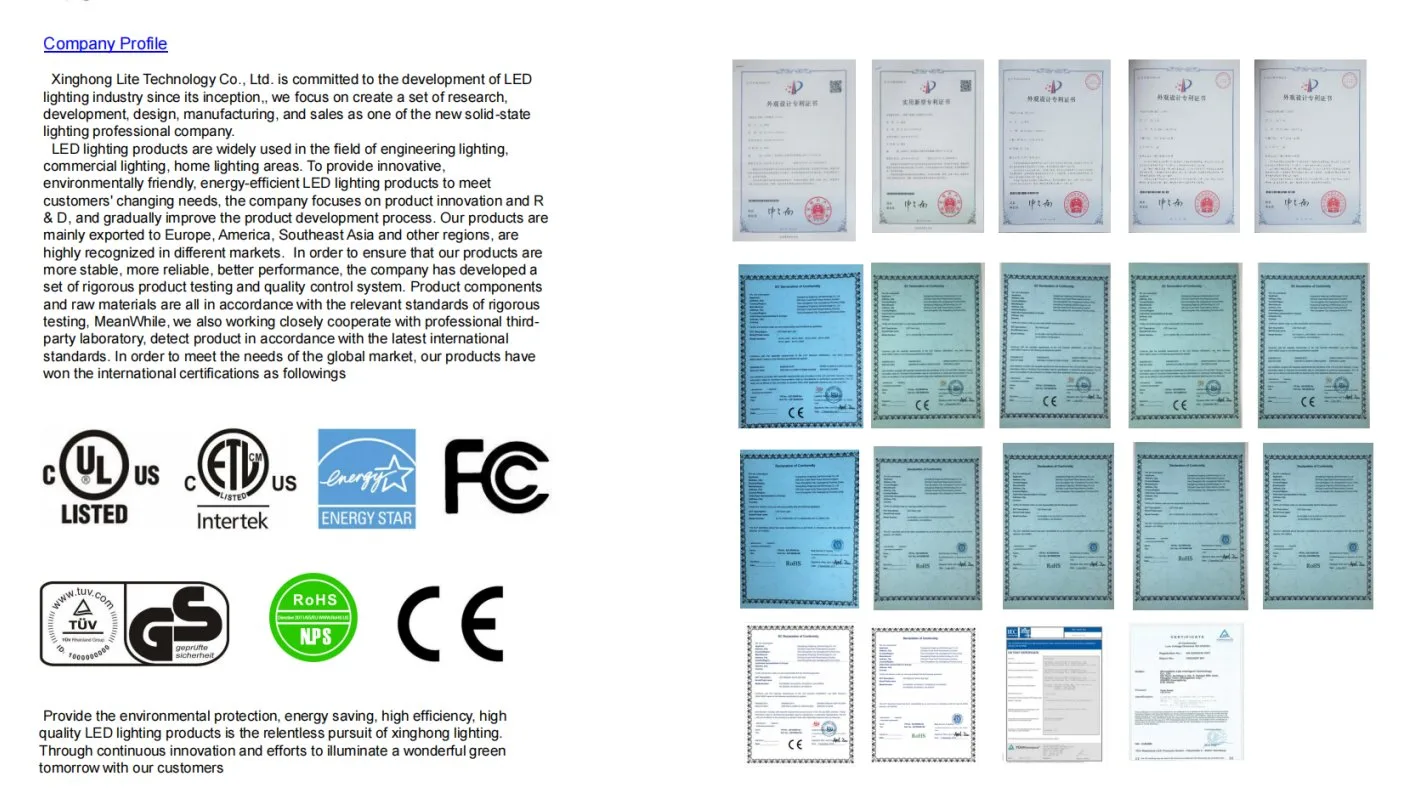
If you're exporting LED lights to Saudi Arabia, you need SASO certification—period. No shortcuts, no workarounds. Ship without it, and your containers get stuck at Jeddah or Dammam ports, incurring daily storage fees that eat into your margins faster than you can say "customs clearance." The Saudi Standards, Metrology and Quality Organisation (SASO) has been tightening enforcement since 2017, and the 2026 updates to blue light hazard classification mean the bar just got higher. This guide breaks down exactly what certifications you need, how to get them, and what mistakes to avoid—based on 8+ years of shipping commercial lighting to the Kingdom.
Why SASO Certification Matters More Than You Think
Let's cut to the chase: Saudi Arabia isn't like other markets where you can ship first and sort out paperwork later. The SABER electronic system tracks every shipment, and if your product doesn't have a valid Certificate of Conformity (CoC), it gets refused at the border. We've seen importers lose entire containers because they thought CE marking was enough—it's not.
SASO certification serves three purposes:
- Energy efficiency compliance: Ensures products meet minimum efficacy standards under SASO 2870
- Safety verification: Confirms electrical safety, EMC, and photobiological safety
- Consumer protection: Gives Saudi buyers confidence that products meet national standards
The stakes are high. A single rejected shipment can cost $5,000+ in storage, re-routing, and testing fees—not to mention the damage to your client relationship.
The Three Pillars of Saudi Lighting Certification
You'll hear people throw around terms like SASO, SABER, and EER like they're interchangeable. They're not. Here's the actual breakdown:
1. SASO IECEE Recognition Certificate
This is your product's safety passport. Based on IEC standards adapted for the Saudi market, it covers:
- Electrical safety per SASO IEC 60598
- Electromagnetic compatibility (EMC) per SASO IEC 61000
- Photobiological safety per SASO IEC 62471 (updated June 2026 with blue light hazard classification)
Pro tip: The June 2026 update added mandatory blue light grading for commercial LED luminaires. Products must meet RG0 or RG1—RG2 gets rejected. If your supplier hasn't updated their test reports, you're shipping blind.
2. Energy Efficiency Registration (EER)
This is where SASO 2870 comes in. All lighting products imported into Saudi Arabia must be registered in the National Energy Efficiency Center (SEEC) database and carry an energy efficiency label.
Key requirements:
- LED lamps: minimum 120 lm/W (smart lighting raised to 140 lm/W as of 2026)
- Luminaires: varies by type, but typically 85-110 lm/W system efficacy
- Mandatory energy label on every product and package
3. SABER Certificate of Conformity (CoC)
SABER is the electronic platform that ties everything together. For each shipment, you need a CoC issued by an approved body. Think of it as your shipment's visa into the Kingdom.
The process:
- Register your product in SABER
- Upload IECEE and EER certificates
- Request a Product Certificate (PC)
- For each shipment, request a Shipment Certificate (SC)
SASO Standards by Product Type: Quick Reference
Not all lighting products follow the same standards. Here's what applies to what:
Industry insider: Street lights and flood lights have longer lead times because they require additional environmental testing—dust ingress, thermal cycling, and corrosion resistance. Don't promise your client 4-week turnaround on these; you'll miss it.
| Product Type | Primary Standard | Key Requirements | Typical Certification Time |
|---|---|---|---|
| LED downlights/panels | SASO 2870, SASO IEC 60598 | Efficacy ≥100 lm/W, CRI ≥80, PF ≥0.9 | 4-6 weeks |
| LED street lights | SASO 2927, SASO 2902 | Efficacy ≥132 lm/W, IP66 minimum | 6-8 weeks |
| LED flood lights | SASO 2902 | Efficacy ≥120 lm/W, IK08 impact resistance | 5-7 weeks |
| High bay lights | SASO 2870, SASO IEC 60598 | Efficacy ≥130 lm/W, 50,000hr lifespan | 5-7 weeks |
| Linear/strip lights | SASO 2902 AMD2 | Per-meter lumen declaration, EER label | 4-6 weeks |
| Smart lighting | SASO 2873:2025 | 140 lm/W minimum, EMC testing for dimming | 8-10 weeks |
The 2026 Updates You Can't Afford to Miss
SASO doesn't stand still. Here's what changed recently that affects your bottom line:
Blue Light Hazard Classification (June 2026)
Starting October 2026, all commercial LED luminaires must pass photobiological safety testing and carry an RG0 or RG1 classification. This isn't just for studio lights anymore—it covers downlights, panels, high bays, the whole works.
What this means for you:
- Old test reports without blue light grading are invalid
- You'll need new IEC 62471 test reports from accredited labs
- Products with RG2 classification are banned from import
Smart Lighting Energy Label 2.0 (July 2026)
If you're selling dimmable or smart LED products, the bar just got raised:
- Minimum efficacy increased from 120 lm/W to 140 lm/W
- Additional EMC testing required for dimming modules per SASO 2873:2025
- Existing registrations must be renewed within 12 months
SASO 2902 Amendment 2
For linear and strip lighting:
- Hazardous substances requirements moved to separate technical regulation
- Per-meter power and lumen declaration mandatory
- All products under 1 meter must still declare per-meter values
Common Mistakes That Get Shipments Rejected
After handling hundreds of Saudi lighting projects, we've seen every mistake in the book. Here are the top five:
1. Assuming CE = SASO
This is the #1 mistake new exporters make. CE marking doesn't count in Saudi Arabia. The standards are different—different efficacy requirements, different safety thresholds, different documentation.
2. Wrong Energy Label Placement
The energy efficiency label must be on the product itself, not just the packaging. It needs to be in Arabic and English, and it must show the correct efficacy class. We've seen shipments rejected because the label was on the box but not the fixture.
3. Mismatched Product Specifications
Your test report says 150 lm/W, but your actual product only delivers 120 lm/W? SASO does random testing at ports, and if the numbers don't match, your shipment gets seized. Always verify product performance against certification specs.
4. Expired Certificates
SASO certificates aren't permanent. Most need renewal every 1-3 years. If your certificate expired last month, your shipment gets rejected today. Mark renewal dates in your calendar 60 days in advance.
5. Skipping the SABER Registration
Some importers try to bypass SABER by using a different HS code or shipping through neighboring countries. Don't do it. Saudi customs has cracked down hard on this, and the penalties are severe—including blacklisting.
How to Get SASO Certified: Step-by-Step
Ready to get your products certified? Here's the actual process, not the simplified version you see on other websites:
Step 1: Product Testing
Send samples to a SASO-accredited lab for:
- Photometric testing (efficacy, CRI, CCT, beam angle)
- Electrical safety testing
- EMC testing
- Photobiological safety (blue light) testing
What you need: 2-5 samples per model, product specifications, schematic diagrams.
Step 2: IECEE Certificate Application
Submit test reports to SASO for IECEE recognition. This typically takes 2-4 weeks after you have the test reports.
Step 3: Energy Efficiency Registration
Register your product in the SEEC database. You'll need:
- IECEE certificate
- Photometric test report
- Product label design (Arabic + English)
- Energy label design
Step 4: SABER Product Certificate
Once you have IECEE and EER, register in SABER and apply for your Product Certificate. This is valid for one year.
Step 5: Shipment Certificate
For each shipment, apply for a Shipment Certificate through SABER. You'll need the invoice, packing list, and Product Certificate number.
Real talk: The whole process takes 6-12 weeks for a new product, depending on the product type. Don't wait until you have an order to start certification—you'll lose the deal.
Cost Breakdown: What SASO Certification Actually Costs
Let's talk money. Certification isn't free, and you need to build these costs into your pricing:
| Certification Stage | Typical Cost (USD) | Notes |
|---|---|---|
| Photometric testing | $800 per model | Depends on product complexity |
| Safety/EMC testing | $1,500 per model | More for outdoor/drivers |
| IECEE certificate | $500 | Annual renewal required |
| EER registration | $400 | Per product model |
| SABER Product Certificate | $300 | Annual renewal |
| SABER Shipment Certificate | $200 per shipment | Based on shipment value |
Total per model: $3,700 for initial certification, plus annual renewals of $1,200.
For a full product line of 20-30 SKUs, you're looking at $100,000 in certification costs. That's why working with a manufacturer that already has SASO certification saves you so much money—you don't have to foot the bill yourself.
Working with a Manufacturer That Already Has SASO
Here's the secret most people don't tell you: you don't have to get certified yourself. If you work with a manufacturer that already has valid SASO certification for their products, you can use their certificates for your shipments.
This approach:
- Cuts your time-to-market from 3 months to 3 days
- Eliminates certification costs entirely
- Reduces risk of customs issues
- Lets you focus on selling instead of paperwork
But—and this is critical—make sure the manufacturer's certificates are:
- Current (not expired)
- Cover the exact models you're buying
- Include the 2026 blue light and smart lighting updates
- Issued by a SASO-accredited body
Red flag: If a supplier says they have SASO certification but can't show you the actual certificate numbers or SABER registration, walk away. There are a lot of fakes out there.
How Yakeen Lighting Can Help
At Yakeen Lighting, we've been shipping commercial LED lighting to Saudi Arabia since 2018, and we've got the certification portfolio to prove it. Our entire product line—from LED downlights to high bay lights to street lighting—is fully SASO certified, including the 2026 blue light and smart lighting updates.
What does that mean for you? When you work with us, you don't have to worry about certification. We handle all the paperwork, we provide the SABER registration numbers, and your shipments clear customs without drama. We've shipped over 500 containers to Saudi Arabia without a single certification-related rejection. That's not luck—that's knowing the system inside out.
If you're looking for a commercial lighting supplier in China that actually understands the Saudi market, we should talk. We can provide sample products, certification documentation, and references from existing Saudi clients. And if you're working on a specific project, our engineering team can help you select the right products that meet both your design requirements and SASO standards.
We also offer custom OEM lighting solutions for projects that need something beyond our standard catalog. Whether it's a special color temperature, a custom beam angle with our DF series lens technology, or a completely bespoke fixture, we can design it, certify it, and deliver it—all under one roof.
Ready to stop stressing about SASO certification and start shipping to Saudi Arabia with confidence? Reach out to our team at yakeenlight@outlook.com or WhatsApp +8618103434722, and we'll get you sorted.