
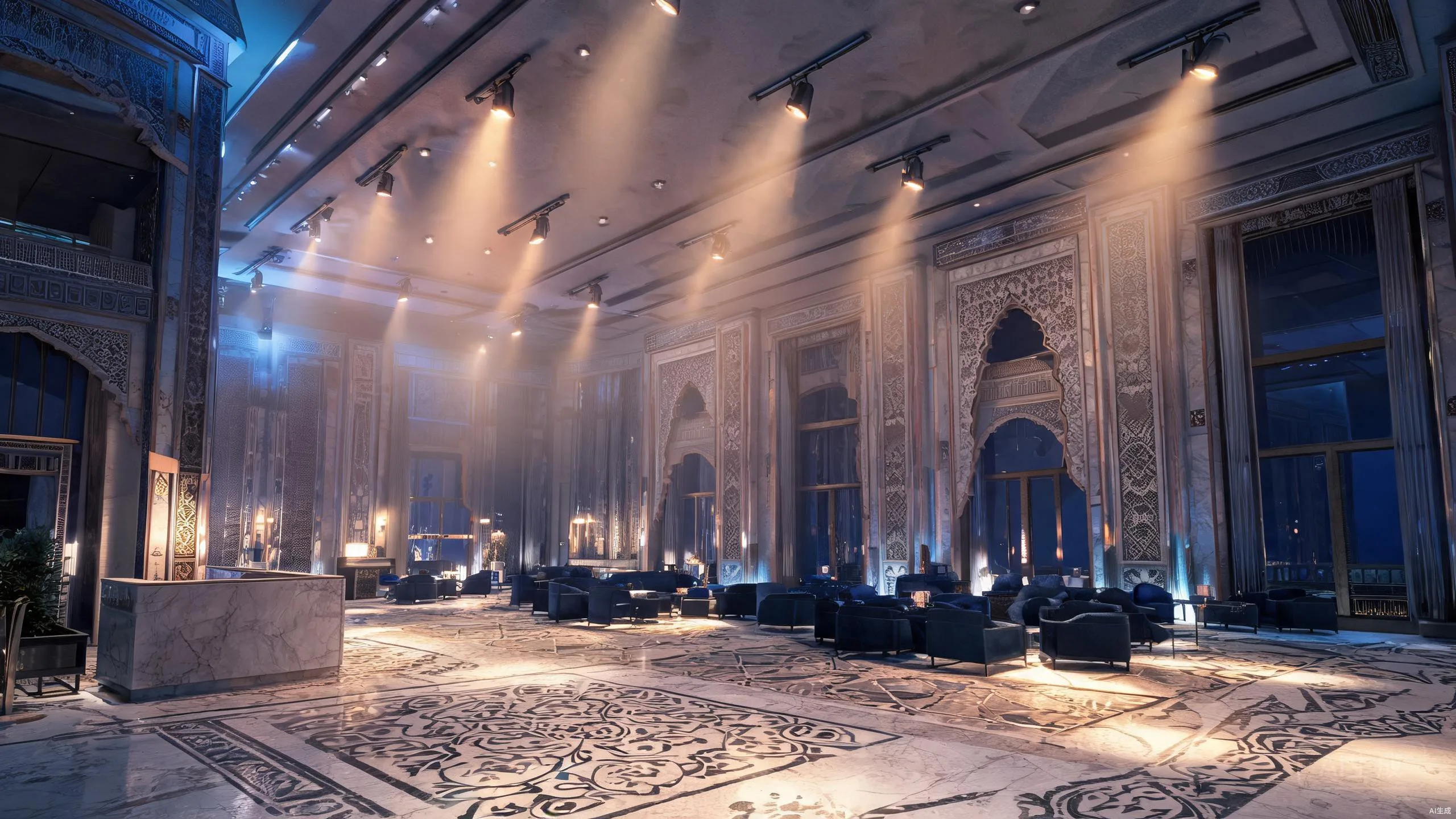
Walk into The Dubai Mall and you'll notice something before you even see the stores—the lighting. It's bright but not harsh, it makes everything look expensive, and it guides you through the space without you even realizing it. That's not an accident. Retail lighting is one of the most powerful tools you have to influence shopper behavior. Get it right, and you increase dwell time, boost conversion rates, and lift average transaction value. Get it wrong, and your mall or store feels cheap, dated, and empty. In the Middle East's hyper-competitive retail market, where new malls open every year, lighting can be the difference between a destination and a ghost town. This guide shows you how to use light to make shoppers stay longer and spend more.
Why Retail Lighting Is Your Most Powerful Sales Tool
Here's the truth most retail operators don't want to hear: your customers don't consciously think about lighting, but it affects everything they do.
Study after study shows that good retail lighting:
- Increases dwell time by 20-30%: People stay longer in well-lit, visually interesting spaces
- Boosts sales by 10-25%: Products look better, people buy more
- Improves perceived value: The same product looks more expensive under good light
- Enhances brand perception: Good lighting signals quality and attention to detail
- Reduces shoplifting: Bright, even lighting makes theft harder
In a market like the Middle East, where malls are entertainment destinations and shoppers have endless options, lighting isn't just infrastructure—it's marketing. It's part of the experience. And it has a measurable ROI.
Quick math: If your mall does $100 million in annual sales, a 10% lift from better lighting is $10 million in extra revenue. The lighting upgrade might cost $1-2 million. That's a 5-10x ROI in year one. Not bad.
The Science of Retail Lighting
Retail lighting isn't just about brightness—it's about psychology. Here's what works and why.
Brightness Attracts
The human eye is drawn to bright things. That's why window displays are brighter than the street, why featured products are spotlighted, and why the front of the store is brighter than the back.
The brightness hierarchy:
- Window displays: 2-3x brighter than street level (to grab attention)
- Featured products: 3-5x brighter than ambient (to draw focus)
- Sales floor: 300-500 lux (general visibility)
- Fitting rooms: 500-700 lux (people need to see themselves clearly)
- Corridors and back areas: 100-200 lux (lower to push focus to merchandise)
Color Temperature Sets the Mood
Color temperature affects how people feel and how products look.
- Warm white (2700K-3000K): Cozy, luxurious, intimate. Best for fashion, jewelry, cosmetics, high-end retail.
- Neutral white (4000K): Balanced, natural, clean. Best for general merchandise, electronics, supermarkets.
- Cool white (5000K-6500K): Bright, energetic, clinical. Best for task areas, pharmacies, electronics.
Pro tip: For fashion retail, 3000K is the sweet spot. It makes skin look good, makes colors pop, and creates a premium feel. 4000K can look harsh and make people look washed out.
Color Rendering Makes Products Look Good
CRI (Color Rendering Index) measures how accurately light shows true colors. Low CRI light makes everything look flat and dull. High CRI light makes products look vibrant and real.
| CRI Range | Quality Level | Best For |
|---|---|---|
| CRI 70-80 | Basic, budget | Avoid for retail |
| CRI 80-90 | Good | General retail |
| CRI 90-95 | Premium | Fashion, cosmetics, art |
| CRI 95+ | Luxury | Jewelry, high-end fashion |
R9 value: Don't just look at overall CRI. R9 (red rendering) is especially important for fashion, food, and cosmetics. High R9 makes reds pop, skin look healthy, and food look delicious.
Contrast Creates Interest
Flat, even lighting is boring. Contrast—bright areas and dark areas—creates visual interest and guides the eye.
How to use contrast:
- Spotlight featured products against darker backgrounds
- Use pools of light over displays rather than uniform ceiling light
- Create visual hierarchy with different brightness levels
- Use shadow to add depth and drama
Mall Common Area Lighting: Setting the Stage
The mall common areas are the stage where everything else happens. Get this right, and shoppers are in a good mood before they even enter a store. Get it wrong, and the whole mall feels cheap.
Atrium and Main Corridors
The atrium is the heart of the mall, and its lighting sets the tone for the entire property.
Design approach:
- Ambient light: 150-200 lux from recessed downlights or decorative fixtures
- Accent light: Spotlights on architectural features, art, landscaping
- Vertical brightness: Light the walls and columns, not just the floor. It makes the space feel bigger and more open.
- Decorative elements: Statement chandeliers or lighting installations as focal points
- Color temperature: 3000K warm white for most malls. It feels luxurious and welcoming. 4000K for more modern, contemporary concepts.
Storefronts and Window Displays
Storefronts are where the mall meets the store, and the lighting needs to work for both.
Best practices:
- Window displays brighter than corridor: 500-1000 lux to draw the eye
- Color temperature match: The storefront light should match the store's interior light
- No glare: Don't shine lights directly into shoppers' eyes
- Daytime vs. nighttime: Window displays need to be visible both day and night. Use enough light to compete with daylight.
Food Court and Dining Areas
Food courts have their own lighting needs.
Lighting strategy:
- General ambient: 200-300 lux, warm white (3000K)
- Table lighting: Pendants or recessed fixtures over tables for pools of light
- Food display lighting: High CRI (90+) to make food look appetizing
- Daypart dimming: Brighter during lunch rush, dimmer and more intimate in the evening
Restrooms and Service Areas
Don't overlook the restrooms. Clean, well-lit restrooms signal quality and attention to detail.
Requirements:
- Bright, even lighting (300-500 lux)
- Good color rendering for mirrors (CRI 90+)
- No harsh shadows on faces
- Vanity lighting at face level, not overhead
- Night mode for after hours
Supermarket and Grocery Lighting: Making Food Look Fresh
Supermarket lighting is a specialty. You need enough light for people to read labels, but you also need to make food look fresh and appealing. Get it wrong, and your produce looks wilted and your meat looks gray. In the Middle East's competitive grocery market—where Lulu, Carrefour, and local chains fight for every customer—lighting can be the difference between a full basket and an empty one.
Produce Section: Making Vegetables Look Vibrant
Nothing kills produce sales faster than gray, lifeless lighting. Vegetables need light that makes greens look green and reds look red.
Specifications:
- CRI 90+ minimum, CRI 95+ preferred: Makes colors pop
- High R9 value: Critical for red fruits and vegetables
- Color temperature: 3500K-4000K neutral white. Warm white makes produce look old; cool white makes it look artificial.
- Illuminance: 500-750 lux on the display surface
- No UV or IR: Heat from lights accelerates wilting. LED is perfect because it emits minimal heat and no UV.
Pro tip: Use a slightly higher color temperature (4000K) for produce than for the rest of the store. It makes vegetables look crisp and fresh.
Meat and Seafood: The Red Rendering Challenge
Meat is all about red. If your lighting has poor R9 (red rendering), that beautiful steak looks brown and unappetizing.
Requirements:
- R9 > 50 minimum, R9 > 80 preferred: Makes meat look fresh and appealing
- CRI 90+: Essential for color accuracy
- Color temperature: 3000K-3500K. Cooler temperatures make meat look gray.
- Specialized meat lamps: Some suppliers offer "meat spectrum" LEDs with enhanced red wavelengths
Warning: Don't use standard cool white LEDs (5000K+) in meat displays. They make beef look gray and fish look old. We've seen butchers lose 20% of sales just from bad lighting.
Bakery: The Warm Glow of Fresh Bread
Bakery lighting is about warmth and appetite. You want people to smell the bread and see the golden crust.
Best practices:
- Color temperature: 2700K-3000K warm white. Creates a cozy, appetizing atmosphere.
- Accent lighting: Spotlights on featured items (fresh croissants, cakes, bread)
- Display case lighting: Internal LED strips with high CRI so pastries look delicious through glass
General Merchandise and Aisles
For the rest of the supermarket—packaged goods, household items, personal care—you need efficient, uniform lighting.
- Aisle lighting: 300-500 lux, 4000K neutral white
- Linear fixtures: Ideal for long aisles, provides uniform light distribution
- Energy efficiency: Supermarkets run 16-24 hours a day. High-efficacy LEDs (150+ lm/W) are essential.
Quick calculation: A 5,000 sqm supermarket with 400 fluorescent tubes (36W each) uses ~57,600 kWh/year for lighting. Switch to 18W LED tubes at 170 lm/W, and you cut that to ~28,800 kWh/year. At 0.30 AED/kWh, that's 8,640 AED in annual savings just from the tube upgrade.
Mall Lighting Trends in the Middle East
The Middle East retail market is evolving fast, and lighting is evolving with it. Here's what we're seeing in 2026.
Human-Centric Lighting
More malls are tuning lighting to match natural circadian rhythms—brighter, cooler light in the morning and afternoon for energy, warmer, dimmer light in the evening for relaxation. It makes shoppers feel better and stay longer.
Smart Lighting Control
Modern malls use smart control systems that:
- Automatically adjust for daypart (morning, afternoon, evening, late night)
- Dim lights in low-traffic areas
- Monitor energy use per zone
- Integrate with security and BMS systems
- Save 30-50% on lighting energy
Experiential Lighting
Lighting isn't just for illumination anymore—it's part of the entertainment.
Examples:
- Interactive light installations
- Seasonal lighting displays (Ramadan, Eid, Christmas)
- Color-changing feature lighting
- Projection mapping on atriums and facades
Sustainability
With Saudi Arabia's Vision 2030 and the UAE's Net Zero 2050, sustainability is becoming mandatory.
- All new malls specify high-efficacy LED lighting
- Smart controls for energy optimization
- Daylight harvesting in areas with skylights
- Green building certifications (LEED, Estidama, Sa'fat)
Common Retail Lighting Mistakes
We've seen hundreds of retail and mall lighting projects, and these are the mistakes that keep happening:
| Mistake | Why It Hurts | The Fix |
|---|---|---|
| Too Much Ambient, Not Enough Accent | Flat, boring, feels like an office | Add contrast with spotlights and track lighting |
| Wrong Color Temperature | 4000K makes people look washed out | Use 3000K for fashion and lifestyle retail |
| Low CRI Fixtures | Products look bad, store feels cheap | Minimum CRI 90, CRI 95+ for luxury |
| Glare | Shoppers squint, get headaches | Use deep-recessed downlights and diffusers |
| Bad Fitting Room Lighting | Fewer sales, negative experience | Front-facing vanity light, CRI 95+, 3000K |
Case Study: Mall of the Emirates Renovation
When Mall of the Emirates renovated its fashion district in 2025, lighting was a key part of the upgrade.
What they did:
- Replaced all downlights with high-CRI (90+) LED fixtures
- Added track lighting in common areas for flexibility
- Installed smart controls with daypart scheduling
- Upgraded fitting room lighting in all anchor stores
- Added accent lighting on architectural features
The results:
- 15% increase in sales in the fashion district
- 22% longer average dwell time
- 40% reduction in lighting energy use
- 4.7/5 customer satisfaction rating for "atmosphere"
That's what good retail lighting does. It pays for itself many times over.
How Yakeen Lighting Approaches Retail Projects
At Yakeen Lighting, we've worked on retail and mall projects across the Middle East—from small boutiques to mega-malls. We understand that retail lighting isn't just about putting lights in the ceiling—it's about creating an environment that makes people want to buy.
Our retail lighting solutions:
- Downlights and spotlights: 10W-50W, CRI 90+, multiple beam angles, dimmable
- Track lighting systems: Flexible, adjustable, perfect for retail displays
- Linear lighting: For coves, corridors, and architectural lighting
- Display case lighting: Miniature spotlights, strip lights, for jewelry and showcases
All fixtures: SASO certified, high-temperature rated, built for the Gulf climate
What sets us apart:
- Retail expertise: We know what works in retail and what doesn't. We don't just sell fixtures—we sell results.
- Optical precision: Our DF series lens technology gives you exact control over beam angles and light distribution. No more "close enough" lighting.
- Color quality: CRI 90+ standard, 95+ available. R9 values above 90. Your products will look their best.
- Smart controls: We design complete control systems with daypart scheduling, dimming, and energy monitoring.
- SASO certified: Full compliance for Saudi projects, no customs issues.
We also offer custom retail lighting solutions for brands that need something special—custom finishes, unique form factors, special optics, you name it. We've designed everything from jewelry display lighting to custom track systems for major retail brands.
If you're working on a retail or mall lighting project in the Middle East, don't leave lighting as an afterthought. It's one of the highest-ROI investments you can make. Reach out to us at yakeenlight@outlook.com or WhatsApp +8618103434722, and let's talk about how to make your space shine—and your sales grow.