
Here's a stat that should make every office manager in Riyadh sit up: bad lighting costs you 10-15% in productivity. That's not guesswork—that's peer-reviewed research. Employees working under poor lighting report more eye strain, more headaches, more fatigue, and lower overall job satisfaction. In a market like Saudi Arabia, where talent is expensive and competition is fierce, can you really afford to lose 10% of your team's output because you cheaped out on the lights? The good news: upgrading to proper office LED lighting pays for itself in months through productivity gains alone, not to mention energy savings. This guide shows you how to design office lighting that actually makes people work better, not just see better.
Why Office Lighting Matters More Than You Think
Most companies treat office lighting as a basic utility—like electricity or water. As long as it turns on, it's fine. But that's like saying a chair is fine as long as you can sit on it. The quality matters. A lot.
The Productivity Connection
Study after study confirms what common sense tells you: good lighting makes people more productive.
Research findings:
- 10-15% productivity increase with optimized lighting (according to the Lighting Research Center)
- 23% reduction in eye strain complaints with proper office lighting
- 18% fewer sick days in offices with good lighting (fewer headaches and eye issues)
- Better mood and focus with natural or natural-like light
Let's do the math. If you have 100 employees earning an average of 15,000 SAR per month, your payroll is 1.5 million SAR per month. A 10% productivity gain is like getting 10 extra employees for free. That's 150,000 SAR per month in extra output.
A full office lighting upgrade might cost 100,000-200,000 SAR. Payback period? Less than 2 months from productivity alone. And that's before you count the 60-70% energy savings.
Health and Wellbeing
Bad lighting doesn't just hurt productivity—it hurts people.
Common lighting-related complaints:
- Eye strain and dry eyes
- Headaches and migraines
- Fatigue and drowsiness
- Difficulty concentrating
- Neck and shoulder pain (from squinting and bad posture)
- Seasonal affective disorder (SAD) in windowless offices
Good lighting isn't a luxury—it's an occupational health issue.
The Science of Good Office Lighting
Good office lighting isn't just about brightness. It's about matching the light to human biology.
Color Temperature and Alertness
Color temperature affects your circadian rhythm and alertness.
- Cool white (5000K-6500K): Bright, alert, energetic. Good for morning and high-focus tasks.
- Neutral white (4000K): Balanced, natural, comfortable. The standard for most office spaces.
- Warm white (2700K-3000K): Relaxed, cozy, intimate. Good for break rooms and casual areas.
The current consensus: 4000K neutral white is the sweet spot for general office work. It's bright enough for alertness but not so cool that it feels clinical. For areas where people do detailed work for long hours, 4500K can work well.
Pro tip: If you have smart controls, you can tune the color temperature throughout the day—cooler in the morning for energy, warmer in the afternoon for relaxation. This is called "human-centric lighting" and it's the future of office design.
Illuminance: How Much Light Do You Need?
More isn't always better. Too much light causes glare and discomfort. Too little causes eye strain. Here's what the standards say:
| Area Type | Recommended Lux | Standard |
|---|---|---|
| General open office | 300-500 lux | ISO 8995-1 / CIBSE LG7 |
| Detailed work (drawing, CAD) | 500-750 lux | For tasks requiring high visual acuity |
| Meeting rooms | 300-500 lux | Adjustable for presentations |
| Private offices | 300-500 lux | With task lighting for desks |
| Corridors and circulation | 100-200 lux | Lower than work areas |
| Break rooms and cafeterias | 200-300 lux | Relaxed atmosphere |
| Restrooms | 200-300 lux | Clean, bright feel |
Uniformity matters too: The ratio of brightest to dimmest should be no more than 3:1 on work surfaces. No dark spots, no pools of bright light.
Glare: The Silent Productivity Killer
Glare is the #1 lighting complaint in offices. When you can see the bare LED source from your desk, that's glare. It causes eye strain, headaches, and reduced productivity.
Glare metrics:
- UGR (Unified Glare Rating): The standard measure. For offices, aim for UGR ≤19. UGR ≤16 is excellent.
- UGR 22: Acceptable for corridors and non-work areas
- UGR 25: Too much glare for office work
How to control glare:
- Use diffused light sources (panel lights, diffused downlights)
- Deep-recessed LEDs with baffles or louvers
- Indirect lighting (bouncing light off ceilings and walls)
- Proper fixture placement (not directly in line of sight)
- Anti-glare coatings on lenses
Color Rendering: Seeing Clearly
CRI (Color Rendering Index) measures how accurately light shows true colors. In offices, this matters more than you think.
- CRI 80: Minimum acceptable for offices
- CRI 90: Good quality, colors look natural
- CRI 95+: Excellent, professional design work, print review
Why it matters: If your CRI is low, colors look washed out and flat. People have trouble distinguishing between similar shades. For design firms, marketing agencies, and print shops, high CRI is non-negotiable.
Panel Lights vs. Downlights: The Great Office Debate
The first question every office project faces: panel lights or downlights? Both work, but they have different strengths.
LED Panel Lights
The square or rectangular fixtures that fit into suspended ceilings. The workhorse of office lighting.
Advantages:
- Excellent uniformity—very even light across the space
- Low glare (UGR <19 typically)
- Easy to install in grid ceilings
- Cost-effective per lumen
- Clean, modern look
Disadvantages:
- Can look flat and institutional if overused
- Less flexibility for zoning and accent lighting
- Require suspended ceilings (or surface mounting)
- Can be harder to dim smoothly
Best for: Open plan offices, cubicle farms, general work areas, corridors
LED Downlights
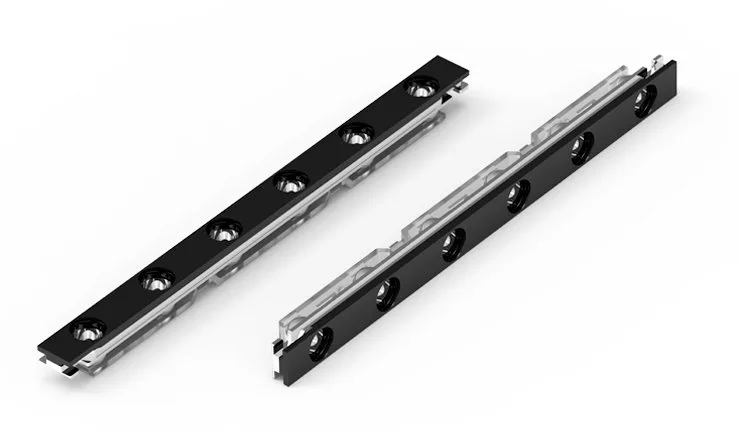
Recessed circular fixtures that install in drywall or ceiling tile. More flexible and architectural.
Advantages:
- More modern, premium look
- Flexible placement and zoning
- Can create visual interest with spacing patterns
- Available in many beam angles and styles
- Work with any ceiling type
Disadvantages:
- Can create uneven light if spaced poorly
- Higher cost per lumen than panels
- Glare control varies widely by quality
- More fixtures needed for same coverage
Best for: Private offices, meeting rooms, reception areas, modern design concepts
| Feature | LED Panel Lights | LED Downlights |
|---|---|---|
| Light uniformity | Excellent—very even across space | Can be uneven if spaced poorly |
| Glare control | Low glare (UGR <19 typically) | Varies widely by quality |
| Ceiling type | Requires suspended grid ceiling | Works with any ceiling type |
| Cost per lumen | Cost-effective | Higher cost per lumen |
| Design flexibility | Less flexible for zoning | Highly flexible placement |
| Best application | Open plan, cubicles, corridors | Private offices, meeting rooms, reception |
The Hybrid Approach
The best office lighting usually combines both:
- Panel lights for general ambient light in open work areas
- Downlights for corridors, meeting rooms, private offices, and accent areas
- Task lights at individual desks for extra light where needed
Rule of thumb: If it's a traditional office with grid ceilings and lots of workstations, panels are the default. If it's a modern, high-end office with drywall ceilings and a design focus, downlights look better.
Task Lighting: The Missing Piece
Here's a secret most people don't know: you don't need 500 lux from ceiling lights everywhere. You can have 300 lux of ambient light from the ceiling, and add task lighting at desks to get to 500 lux where people actually work. This approach saves energy, reduces glare, and gives people control.
Why Task Lighting Makes Sense
- Energy savings: You're only lighting the work surface, not the whole room
- Personal control: People can adjust their own light level
- Better ergonomics: Light exactly where you need it
- Flexibility: Rearrange desks without rewiring the ceiling
Types of Task Lighting
Desk lamps:
- Adjustable arm for positioning
- Dimmable, with color temperature control
- Modern designs that look good, not like 1980s office lamps
- USB charging ports as a bonus
Under-cabinet lights:
- For workstations with overhead storage
- Linear LED strips or puck lights
- Great for detail work
Monitor-mounted lights:
- Clip onto the top of your monitor
- Shine light on the desk, not in your eyes
- Popular with programmers and designers
- Some even sync with screen brightness
In-desk lighting:
- Built into the desk surface
- Clean, integrated look
- Popular in high-end office design
Pro tip: For a modern office, provide 200-300 lux of ambient light from ceiling fixtures, and let people add task lighting as needed. It's more efficient, more comfortable, and people love having control.
Meeting Room Lighting: More Complex Than You Think
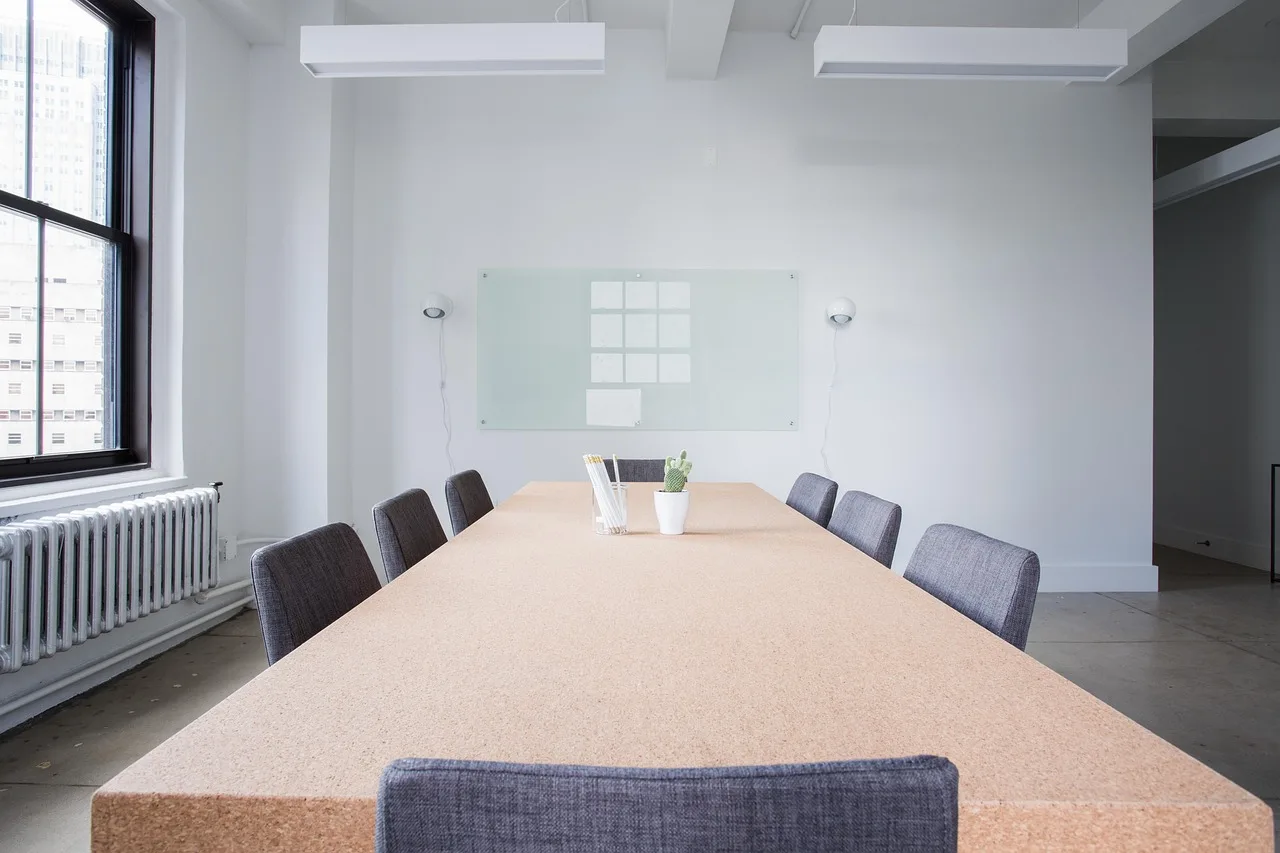
Meeting rooms seem simple—just put some lights in the ceiling, right? Wrong. Meeting rooms have multiple modes, and the lighting needs to work for all of them.
Meeting Room Modes
Presentation mode:
- Dim ambient light so the screen is visible
- Keep some light on the table so people can take notes
- Wall lights off to reduce screen glare
- Dimmable, with a preset scene
Discussion mode:
- Bright, even light across the table
- Good color rendering so people can read faces
- 300-500 lux at table level
- 4000K neutral white for alertness
Video conferencing mode:
- Even, soft light on people's faces
- No backlighting from windows (use blinds)
- No harsh shadows
- CRI 90+ for accurate skin tones on camera
Training mode:
- Bright, even light
- Whiteboard lighting (spotlights or wall washers)
- Ability to dim for presentations
- Good color rendering for materials
Lighting Design Tips
- Dimmers are mandatory: If your meeting room lights aren't dimmable, you're doing it wrong.
- Multiple layers: Ambient + accent + task (on the table)
- Control panel near the door: With preset scenes (Presentation, Discussion, Video Call, Off)
- Window treatments: Blinds or shades to control daylight and glare
- Whiteboard lighting: Make sure the whiteboard is well-lit, with no glare on the surface
Common mistake: Putting a single row of downlights down the center of the table. It creates glare in people's eyes and shadows on the table. Use two rows, or use wider beam angles.
Reception and Common Areas: First Impressions
The reception area is where visitors form their first impression of your company. It should look professional, welcoming, and on-brand.
Reception Desk
The reception desk is the focal point.
Lighting approach:
- Backlighting: Backlit logo or feature wall behind the desk
- Task lighting: Under-cabinet or desk lighting for the receptionist
- Face lighting: Soft, even light on the receptionist's face
- No glare: Don't shine lights directly into visitors' eyes
Waiting Area
The waiting area should feel comfortable and welcoming.
Design tips:
- Lower ambient light than work areas (200-300 lux)
- Table lamps or floor lamps for pools of light
- Accent lighting on art and brand elements
- Warmer color temperature (3000K) for a relaxed feel
- Comfortable seating with good reading light
Corridors and Circulation
Corridors don't need to be as bright as work areas, but they shouldn't feel like caves either.
Best practices:
- 100-200 lux ambient light
- Even spacing to avoid "zebra striping"
- Accent lighting on art or architectural features
- Emergency lighting integrated seamlessly
- Night mode for after hours
Smart Office Lighting: The New Standard
Modern offices aren't stuck with dumb on/off switches. Smart lighting controls are becoming standard, and for good reason.
What Smart Office Lighting Does
Occupancy sensing:
- Turn lights off when rooms are empty
- Save 30-50% on lighting energy
- No more "who left the lights on?"
Daylight harvesting:
- Dim lights near windows when natural light is sufficient
- Additional 10-30% energy savings
- More consistent light levels throughout the day
Personal control:
- Employees adjust their own light levels (and sometimes color temperature)
- Higher satisfaction and productivity
- App or desk-side controls
Scheduling:
- Lights turn on before work starts, off after work ends
- Different schedules for different zones
- Holiday and weekend modes
Energy monitoring:
- Track energy use per floor or department
- Identify waste and optimization opportunities
- Sustainability reporting
Integration with Other Systems
Smart lighting doesn't exist in a vacuum.
Integrations:
- HVAC: Coordinate with occupancy sensors (lights off + HVAC setback)
- BMS (Building Management System): Centralized control and monitoring
- AV systems: One-touch "presentation mode" that dims lights and turns on the projector
- Security: Lights turn on when motion is detected after hours
- Desk booking: Lights turn on when someone books a desk
ROI check: For a 1,000 sqm office, smart controls typically add 20-30% to the lighting cost but pay for themselves in 1-2 years through energy savings.
Saudi-Specific Office Lighting Considerations
Saudi Arabia's office market has some unique factors you won't find elsewhere.
Climate and Durability
Saudi summers are hot, and office AC runs hard. But lighting still adds heat to the space.
- LED lighting reduces cooling load: LEDs produce much less heat than fluorescent or incandescent. Switching to LED can cut your AC load by 10-15%.
- High-temperature rated fixtures: Even in air-conditioned offices, ceiling cavities can get hot. Make sure fixtures are rated for 40°C+ ambient.
- Dust: Saudi offices get dusty. Fixtures with smooth surfaces are easier to clean. Sealed fixtures (IP40+) keep dust out of the electronics.
Prayer Room Lighting
Every office needs a prayer room, and its lighting has specific requirements.
Design guide:
- 4000K neutral white (standard for prayer spaces)
- Glare-free (UGR ≤19) since worshippers look upward during prayer
- Qibla direction indicator (subtle, not a bright spotlight)
- Ablution area: IP65 fixtures if there's water
- Separate men's and women's areas with separate controls
Ramadan Adjustments
During Ramadan, office schedules and lighting needs change.
- Different hours: Many offices shift to shorter or different hours
- Iftar preparations: Break rooms and common areas need different lighting
- Energy use: With different schedules, lighting schedules need to adjust
Smart controls make this easy—just switch to "Ramadan mode" and all the schedules update automatically.
Common Office Lighting Mistakes
We've seen hundreds of office lighting projects, and these are the mistakes that keep happening:
1. Too Many Panel Lights (The "Office Ceiling" Look)
Covering the entire ceiling with grid panels is cheap and easy, but it looks like a 1990s government office. It's flat, boring, and completely lacks character.
Fix: Mix panels with downlights, linear lights, and accent lighting. Create visual interest.
2. Wrong Color Temperature
6500K cool white in an office? It feels like a hospital or a warehouse. 4000K neutral white is almost always better for office work.
3. Glare from Cheap Downlights
Those $5 downlights from Alibaba? You can see every LED chip from across the room. That's glare, and it's giving your employees headaches. Spend a little more for deep-recessed, low-glare fixtures.
4. No Dimmers
If your office lights only have on/off switches, you're wasting energy and flexibility. Dimmers let you adjust light levels for different tasks, times of day, and moods.
5. Ignoring Daylight
If you have windows, use them. Daylight is free, it's healthy, and it makes people happier. Add daylight sensors to dim electric lights when the sun is shining.
6. Bad Meeting Room Lighting
One row of downlights over the table? Glare in people's eyes, shadows on notebooks, can't see the screen properly. Meeting rooms need layered, dimmable lighting with multiple scenes.
7. Forgetting About Vertical Surfaces
Lighting only the desk wastes the opportunity to make the space feel bigger and more open. Light the walls, the columns, the art. It makes the whole office feel better.
Case Study: Saudi Telecom Company HQ Renovation
When STC renovated its Riyadh headquarters in 2025, lighting was a key part of the "workplace of the future" concept.
What they did:
- Replaced all fluorescent panels with LED panel lights (4000K, CRI 90, UGR <19)
- Added task lighting at every workstation
- Installed smart controls with occupancy sensing and daylight harvesting
- Tunable white lighting (3000K-5000K) that shifts throughout the day
- Meeting rooms with full scene control and video conferencing lighting
- Prayer rooms with 4000K glare-free lighting
The results:
- 65% reduction in lighting energy use
- 12% increase in self-reported productivity
- 28% reduction in eye strain and headache complaints
- LEED Platinum certification for the building
- 4.6/5 employee satisfaction rating for the new workspace
That's what modern office lighting looks like. It's not just about seeing—it's about working better, feeling better, and saving money.
How Yakeen Lighting Approaches Office Projects
At Yakeen Lighting, we've worked on office projects across Saudi Arabia and the UAE—from small startup offices to 50,000 sqm corporate headquarters. We understand that office lighting isn't just about putting fixtures in the ceiling—it's about creating spaces where people want to work and can do their best work.
Our office lighting solutions:
- LED panel lights: 600x600, 300x1200, 600x1200, 100-150 lm/W, UGR <19, CRI 90, dimmable
- LED downlights: 3-inch to 8-inch, multiple beam angles, deep baffles for low glare, CRI 90+
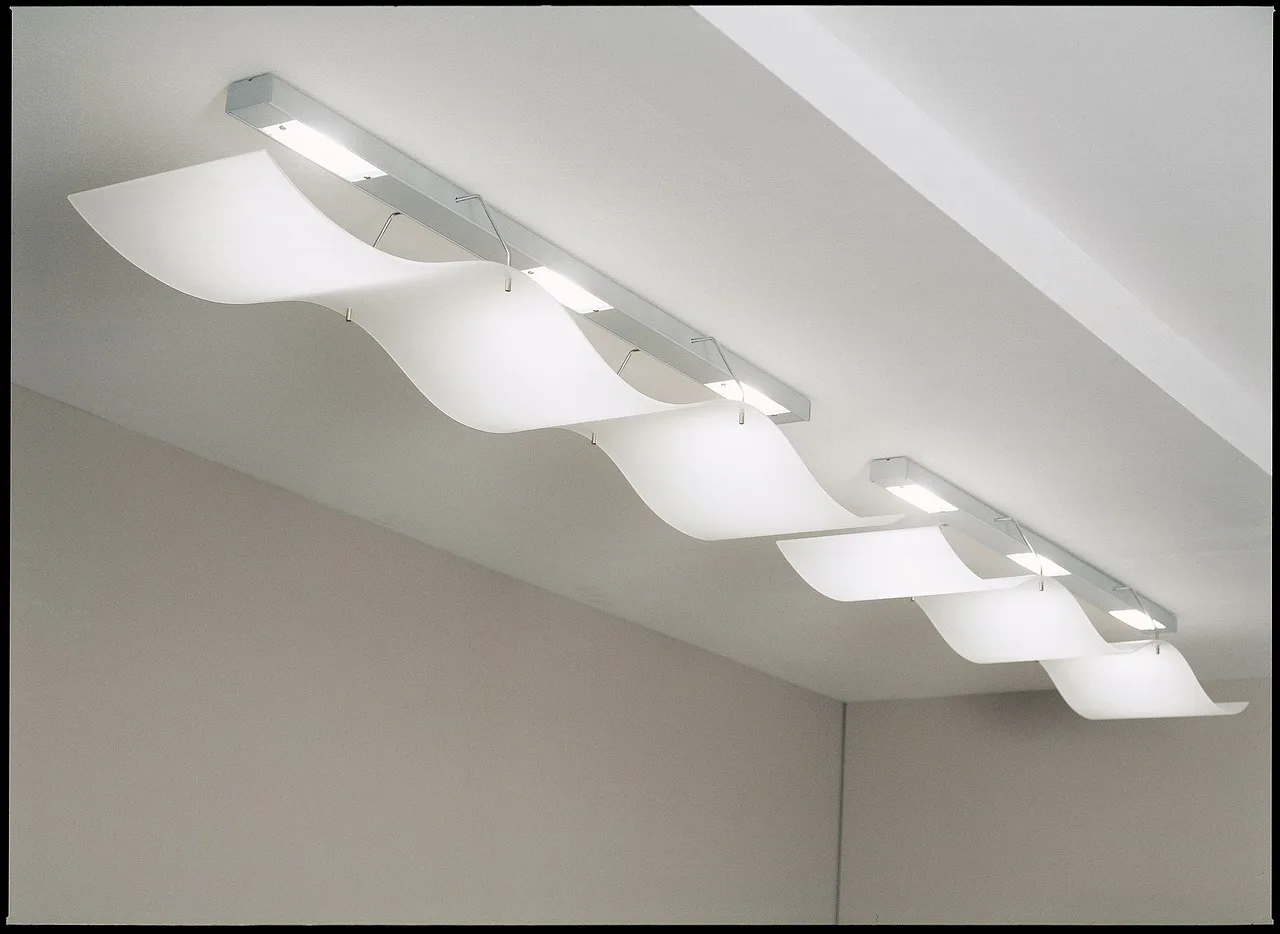
- Linear lighting: Suspended, recessed, surface-mount, for architectural and task lighting
- Task lighting: Desk lamps, under-cabinet lights, monitor lights
- Smart controls: DALI, 0-10V, wireless systems with occupancy sensing and daylight harvesting
- All fixtures: SASO certified, high-temperature rated, built for the Gulf climate
What sets us apart:
- Workplace expertise: We know what makes office lighting work—for productivity, for health, for energy savings.
- Optical quality: Low glare, high CRI, excellent color consistency. Your employees will notice the difference.
- Smart lighting integration: We design complete control systems that are powerful but easy to use.
- SASO certified: Full compliance for Saudi projects, no customs issues.
- Lighting design support: Free DIALux calculations, layout optimization, energy savings analysis.
Our DF series lens technology is particularly valuable for office projects. The precision optics let us create exactly the light distribution we need—wide, even light for open offices, narrow beams for accent lighting, asymmetric distributions for desk areas. No more "one beam angle fits all" compromises.
We also offer custom office lighting solutions for projects that need something special—custom sizes, special finishes, unique form factors, you name it. We've designed everything from custom linear lighting systems to bespoke reception area fixtures for major corporate clients.
If you're planning an office lighting project in Saudi Arabia or anywhere in the Gulf, don't just buy the cheapest fixtures you can find. The right lighting will pay for itself many times over in productivity, energy savings, and employee satisfaction. Reach out to us at yakeenlight@outlook.com or WhatsApp +8618103434722, and let's talk about how to make your office a place where people do their best work.