

If you're buying LED downlights for a commercial project in Saudi Arabia or the UAE, you're probably drowning in options. Search "LED downlight" on Alibaba and you get 100,000+ results, ranging from $2 budget fixtures to $50 premium ones. They all look the same in the product photos, but the difference in quality is night and day. Buy the cheap ones, and you'll be replacing drivers in 18 months, dealing with glare complaints, and watching your energy savings evaporate as fixtures dim and fail. This guide cuts through the marketing BS and tells you exactly what to look for, what to avoid, and how to spec downlights that actually last in the Middle East climate.
Why Downlight Quality Matters More Than You Think
Downlights are the workhorse of commercial lighting. They're everywhere—offices, hotels, retail stores, malls, restaurants. You might have hundreds or thousands of them in a single project.
So why does quality matter? Let's count the ways:
- They're everywhere: A bad downlight isn't just one bad fixture—it's hundreds of them, all failing at the same time.
- They're hard to replace: Replacing a downlight means getting a lift, climbing up into the ceiling, and disturbing the space. Labor costs more than the fixture.
- Glare affects everyone: Cheap downlights with visible LED chips cause eye strain and headaches. Everyone in the building notices.
- Color consistency matters: If half your downlights are 3000K and half are 3500K, it looks terrible. You can't unsee it.
- Heat kills them fast: In the Middle East, ceiling cavities get hot—45-55°C is normal. Cheap drivers fail fast in that heat.
The math: A $10 budget downlight might seem like a deal, but if it fails in 2 years and costs $30 in labor to replace, you've spent $40 total. A $25 premium downlight that lasts 10 years costs $25 + $5 maintenance = $30 total. The premium one is actually cheaper.
And that's before you count the cost of bad light—glare, poor color rendering, inconsistent color temperature. All of which affect how people perceive your building and your brand.
The 8 Specifications That Actually Matter
Every downlight spec sheet lists 20+ parameters. Most of them are marketing fluff. Here are the 8 that actually matter.
1. Luminous Efficacy (lm/W)
This is the efficiency number—how much light you get per watt of electricity.
What to look for:
- Good: 100-120 lm/W (system efficacy, not just LED chip efficacy)
- Better: 120-140 lm/W
- Best: 140+ lm/W (premium chips and drivers)
Watch out for: "LED efficacy" vs. "system efficacy." Manufacturers love to quote the LED chip efficacy (160 lm/W!) but the actual system efficacy (fixture as a whole) might be 100 lm/W. Always look for system efficacy.
Why it matters: Higher efficacy = less electricity = lower operating costs. Over 10 years, the difference between 100 lm/W and 140 lm/W is huge.
2. Color Rendering Index (CRI)
CRI measures how accurately light shows true colors.
What to look for:
- Minimum: CRI 80 (basic commercial)
- Good: CRI 90 (premium commercial, retail, hospitality)
- Best: CRI 95+ (high-end retail, art galleries, color-critical work)
Also check R9: R9 is the red rendering index. High R9 (50+) makes reds look vibrant, skin look healthy, and food look delicious. Many CRI 90 fixtures have terrible R9 (negative even!). Always ask for the R9 value.
Why it matters: Low CRI light makes everything look flat and dull. Your space will feel cheap, even if everything else is high-end.
3. Color Temperature Consistency
Color temperature is the "warmth" of the light—2700K is warm yellow, 4000K is neutral white, 6500K is cool blue. But the real issue is consistency.
What to look for:
- Standard: 3-step MacAdam ellipse (most commercial grade)
- Premium: 2-step MacAdam ellipse (high-end projects)
- Avoid: 5-step or 7-step (cheap fixtures, very noticeable color variation)
What does this mean? MacAdam ellipse measures color variation. 1-step is imperceptible to the human eye. 3-step is barely noticeable. 5-step is obvious—you can see the color difference between adjacent fixtures.
Why it matters: If you install 100 downlights and half are 2900K and half are 3100K (both "3000K" on the spec sheet), your ceiling will look like a checkerboard. It's the #1 complaint about cheap downlights.
4. Glare Control (UGR)
Glare is the #1 lighting complaint in offices. If you can see the LED chips from across the room, that's glare.
What to look for:
- UGR ≤19: Good for offices and general commercial
- UGR ≤16: Excellent, for high-end spaces
- UGR 22: Acceptable for corridors and non-work areas
- UGR 25+: Too much glare, avoid
How to get low glare:
- Deep-recessed LEDs (deep baffles)
- Diffusers or frosted lenses
- Honeycomb louvers
- Proper beam control
Why it matters: Glare causes eye strain, headaches, and reduced productivity. It makes your space feel cheap and uncomfortable.
5. Driver Quality
The driver is the #1 failure point in LED fixtures. A great LED chip with a cheap driver is still a bad fixture.
What to look for:
- Brand name drivers: Mean Well, Philips, Tridonic, Osram, Lifud
- High temperature rating: Ta 50°C minimum, Ta 55°C preferred (critical for Middle East)
- Surge protection: 4kV minimum, 6kV preferred
- Power factor: ≥0.95
- Isolated driver: Safer, better surge protection
Watch out for: "High power factor driver" with no brand name. It's probably a cheap no-name driver that will fail in 1-2 years.
Why it matters: 80% of LED fixture failures are driver failures. A good driver costs more upfront but lasts 3-5x longer.
6. Thermal Management
Heat kills LEDs. Good thermal management is essential, especially in hot climates.
What to look for:
- Aluminum heat sink: Not plastic, not stamped steel
- Thick, finned design: More surface area = better heat dissipation
- Direct thermal path: LED board mounted directly to heat sink (no glue, no plastic spacers)
- Temperature rating: Ta 45°C minimum, Ta 50-55°C preferred for Middle East
Ask for: The LM-80 test report and TM-21 calculation at 55°C. If they can't provide it, the fixture probably isn't rated for high temperatures.
Why it matters: Every 10°C increase in junction temperature cuts LED life in half. A fixture rated for 50,000 hours at 25°C might only last 15,000 hours at 55°C.
7. Build Quality and Materials
You can tell a lot about a downlight by how it's built.
What to look for:
- Housing: Die-cast aluminum or stamped aluminum (not plastic)
- Reflector/baffle: Aluminum with high-reflectivity coating (not plastic)
- Lens: Tempered glass or UV-stabilized PC (not acrylic—acrylic yellows)
- Spring clips: Strong, stainless steel (not cheap wire springs)
- Finish: Powder coating (not paint—paint chips and peels)
Why it matters: Cheap materials degrade fast in the Middle East climate. Plastic yellows, paint peels, cheap springs break. You want fixtures that still look good in 10 years.
8. Warranty
Warranty tells you how much confidence the manufacturer has in their product.
What to look for:
- Minimum: 2 years (budget commercial)
- Good: 3-5 years (mid-range commercial)
- Best: 5-7 years (premium)
Read the fine print: Is it pro-rated? Does it cover labor? Does it cover the whole fixture or just the LED? A 5-year warranty that only covers the LED chip isn't worth much.
Why it matters: Warranty is your insurance. If the fixture fails, you want the manufacturer to stand behind it.
Downlight Types: Which One Do You Need?
Not all downlights are the same. Here are the main types and when to use each.
Fixed Downlights
The basic downlight—shines straight down, no adjustment.
- Best for: General ambient lighting, corridors, areas with uniform ceiling layout
- Advantages: Cheapest, simplest, most compact
- Disadvantages: No adjustability, can't aim light
Adjustable / Gimbal Downlights
Can tilt and rotate to aim light where you want it.
- Best for: Accent lighting, wall washing, highlighting art or features, irregular layouts
- Advantages: Flexible, can aim light precisely
- Disadvantages: More expensive, larger aperture, more glare potential
Wall Wash Downlights
Special optics designed to wash walls with light evenly.
- Best for: Feature walls, art walls, corridor walls, vertical illumination
- Advantages: Even wall illumination, makes spaces feel larger
- Disadvantages: More expensive, specialized use
Fire-Rated Downlights
Designed to maintain the fire rating of the ceiling.
- Best for: Commercial buildings with fire-rated ceilings (most of them)
- Advantages: Code compliant, safety
- Disadvantages: More expensive, larger, harder to install
Important: In Saudi Arabia and the UAE, commercial buildings require fire-rated downlights in fire-rated ceilings. Make sure you specify the correct fire rating (30min, 60min, 90min).
IP-Rated Downlights
Sealed against dust and water.
- Best for: Bathrooms, outdoor covered areas, dusty environments, wash-down areas
- Ratings: IP44 (splash proof), IP54 (dust protected, splash proof), IP65 (dust tight, water jet resistant)
- Advantages: Durable, suitable for wet/dusty areas
- Disadvantages: More expensive, can have more glare if not designed well
Smart / Dimmable Downlights
Dimmable, with smart control options.
- Best for: Smart buildings, offices, hotels, any space with dimming needs
- Control options: 0-10V, DALI, Zigbee, Bluetooth, Wi-Fi
- Advantages: Energy savings, flexibility, better user experience
- Disadvantages: More expensive, require control system
Sizing Guide: What Size Downlight Do You Need?
Downlights come in different sizes. Here's how to choose.
Cutout Size Guide
| Cutout Size | Typical Wattage | Best For |
|---|---|---|
| 75mm (3") | 7-12W | Small spaces, accent lighting, low ceilings |
| 90-100mm (4") | 12-20W | General commercial, offices, retail, most common |
| 125mm (5") | 20-30W | Higher ceilings, more light output needed |
| 150mm (6") | 30-40W | Very high ceilings, large spaces, high bay downlights |
| 200mm (8") | 40-60W+ | Industrial, very high ceilings, warehouse downlights |
Spacing Guide
How far apart should you space downlights? It depends on ceiling height and desired light level.
General rule of thumb:
- Ceiling height 2.5-3m: Space 1.5-2m apart
- Ceiling height 3-4m: Space 2-3m apart
- Ceiling height 4-5m: Space 3-4m apart
Better approach: Get a DIALux or Relux calculation. It takes 30 minutes and gives you exact spacing, light levels, and uniformity.
Pro tip: For 4" downlights in a standard 3m ceiling office, 2.4m x 2.4m spacing is a good starting point for 300-400 lux.
The Middle East Climate Test: What Actually Survives
Here's the truth most suppliers won't tell you: most "commercial grade" downlights from China aren't built for the Middle East climate. They might work fine in Shanghai or Guangzhou, but in Riyadh or Dubai, they fail fast.
What Kills Downlights in the Middle East
- Heat: Ceiling cavities hit 50-55°C in summer. Cheap drivers can't handle it.
- Dust: Fine desert dust gets into everything. Poorly sealed fixtures get dust inside, reducing light output and causing overheating.
- UV: Strong sunlight yellows plastic lenses and degrades materials.
- Power quality: Voltage fluctuations and surges fry cheap drivers.
What to Specify for Middle East Projects
- Ta 50°C minimum rating (Ta 55°C preferred)
- IP44 minimum (IP54 better) for dust protection
- UV-stabilized PC lens (not acrylic)
- 6kV surge protection minimum
- High-temperature drivers (Mean Well or equivalent, 85°C rated)
- Powder-coated aluminum housing (no plastic, no paint)
- 5-year warranty minimum (3-year is a red flag for commercial projects)
If a supplier can't provide test data at 55°C, walk away. Their fixtures will fail in 2-3 years.
Common Downlight Scams and How to Avoid Them
The downlight market is full of marketing tricks and outright scams. Here's what to watch for.
Scam 1: "150 lm/W!" (But It's Chip Efficacy, Not System Efficacy)
The trick: They quote the LED chip efficacy (150 lm/W) but the actual fixture efficacy is 100 lm/W after losses from the driver, lens, and heat sink.
How to spot it: Look for "system efficacy" or "luminaire efficacy." If they only say "LED efficacy," it's the chip number.
Scam 2: "50,000 Hour Lifespan!" (At 25°C, Not Your Actual Temperature)
The trick: They quote L70 lifespan at 25°C ambient. At 55°C (realistic for Middle East ceiling cavities), it's more like 15,000-25,000 hours.
How to spot it: Ask for the TM-21 calculation at 55°C. If they can't provide it, assume the real lifespan is half of what they claim.
Scam 3: "CRI 90!" (But R9 is Terrible)
The trick: They say CRI 90, which sounds great. But R9 (red rendering) is -20, which means reds look brown and gray.
How to spot it: Always ask for the R9 value. Good CRI 90 fixtures have R9 > 50. Great ones have R9 > 90.
Scam 4: "Same as Philips!" (But It's a Cheap Knockoff)
The trick: They say "uses Philips LEDs" but use a cheap driver, bad optics, and poor thermal design. The LED chip is only one part of the fixture.
How to spot it: Look at the whole fixture, not just the LED brand. A great LED with a bad driver is still a bad fixture.
Scam 5: "5-Year Warranty!" (But It's Pro-Rated and Doesn't Cover Labor)
The trick: The warranty sounds great, but it's pro-rated (you get less as time passes) and doesn't cover labor (which costs more than the fixture).
How to spot it: Read the warranty terms. Is it full replacement or pro-rated? Does it cover labor? What's the process for claims?
Real-World Failure Rates: What We've Observed
After 8+ years of supplying downlights to the Middle East, here's what we've seen:
| Quality Level | Price (4" downlight) | 1-Year Failure Rate | 3-Year Failure Rate | 5-Year Failure Rate |
|---|---|---|---|---|
| Budget (Alibaba) | $5 | 5-10% | 30-50% | 60-80% |
| Mid-range (decent brand) | $15 | 1-2% | 5-10% | 15-25% |
| Premium (top brand) | $40 | <0.5% | 1-3% | 5-10% |
The budget fixtures are 4-5x cheaper upfront, but they fail 10x more often. When you factor in replacement labor, the mid-range and premium fixtures are actually cheaper over 5-10 years.
And that's just the hardware cost. It doesn't include the cost of bad light—glare, poor color, inconsistency—that affects everyone in the building every single day.
How Yakeen Downlights Are Different
At Yakeen Lighting, we've been supplying downlights to the Middle East since 2018, and we've learned a thing or two about what works and what doesn't. Our downlights aren't the cheapest you can buy, but they're built to last—actually last—in the Gulf climate.
What Makes Our Downlights Different
- Built for 55°C: Every downlight is tested at 55°C ambient. We provide LM-80 and TM-21 data at actual operating temperature, not 25°C marketing numbers.
- Mean Well drivers standard: No no-name drivers. We use Mean Well (or equivalent) drivers rated for 85°C, with 6kV surge protection.
- DF series lens technology: Our proprietary DF series lens gives you precise beam control, low glare, and excellent uniformity. No "close enough" optics.
- 2-step MacAdam ellipse color consistency: All our downlights are 2-step, so every fixture matches perfectly. No checkerboard ceilings.
- CRI 90+ with R9 > 90: Standard, not an upgrade. Colors look true, skin looks healthy, food looks delicious.
- IP54 minimum: All fixtures are sealed against dust. IP65 available for wet areas.
- 5-year full warranty: Not pro-rated. If it fails, we send a new one. No fine print.
- SASO certified: Full compliance for Saudi projects, no customs issues.
Our Downlight Lineup
- 3" (75mm): 7-12W, fixed or adjustable, CRI 90+, UGR <19
- 4" (95mm): 12-20W, fixed, adjustable, wall wash, CRI 90+, UGR <19
- 5" (125mm): 20-30W, fixed or adjustable, CRI 90+, UGR <19
- 6" (150mm): 30-40W, fixed, CRI 90+, UGR <19
- All sizes: Dimmable (0-10V, DALI, wireless), fire-rated options, IP65 options
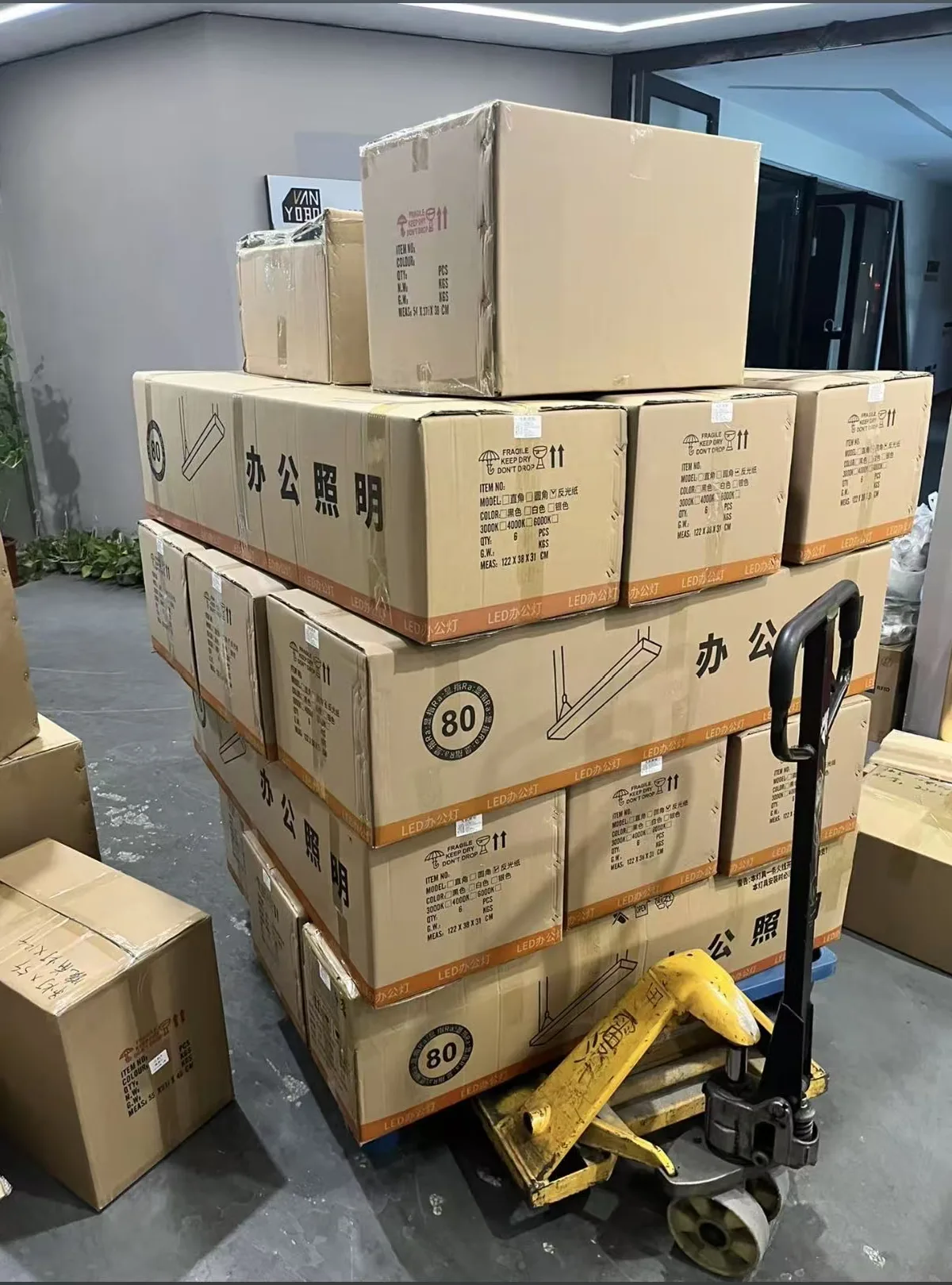
We also offer custom downlight solutions for projects that need something special—special sizes, custom finishes, unique optics, you name it. We've designed downlights for everything from luxury hotels to high-end retail to corporate headquarters.
If you're buying downlights for a commercial project in Saudi Arabia, the UAE, or anywhere in the Gulf, don't gamble with cheap fixtures that will fail in 2 years. Talk to us first. We'll give you honest advice, realistic pricing, and fixtures that actually last. Reach out at yakeenlight@outlook.com or WhatsApp +8618103434722, and let's make sure your project looks great—now and in 10 years.